RetroLit SFL / Practical guide
How Commercial Property Managers Evaluate an LED Retrofit
Published
Evaluate a commercial LED retrofit using existing lighting needs, measured operating hours, light distribution, controls compatibility and maintenance planning.
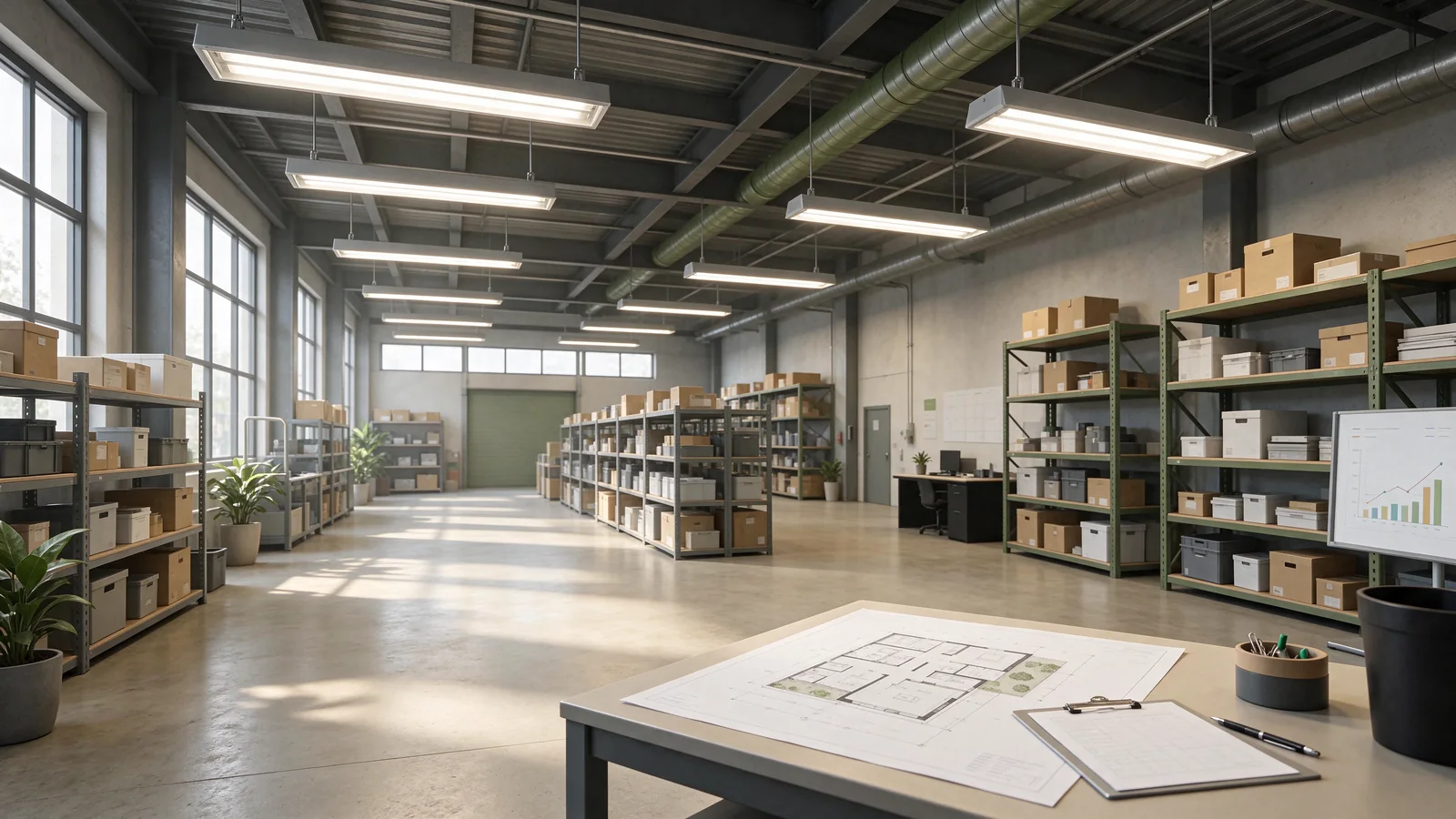
A useful LED retrofit evaluation starts with the property, not a replacement lamp catalog. Commercial property managers need to understand what the existing lighting does well, where it falls short and how the building actually operates. Lower input wattage matters, but the decision also depends on whether the proposed system delivers appropriate light where people need it. DOE guidance emphasizes adequate lighting for the task and warns against comparing unlike fixtures on efficiency alone. [3]
Document the existing lighting and its purpose
Build an inventory by area: offices, corridors, storage rooms, garages and outdoor parking areas may need different solutions. Record fixture quantities, lamp types, mounting heights and existing controls. Have the lighting professional document ballast or driver information and equipment condition. Cracked lenses, discolored reflectors and damaged housings can change the choice between a compatible lamp replacement, a retrofit kit and a complete new fixture. [1]
Pair that inventory with an account of how each space is used. A reception desk needs different lighting from a circulation route or a shelf-picking area. Record occupant complaints about glare, shadows or inconsistent brightness. Measure existing light levels at representative locations before selecting equipment; the current installation is a baseline, not automatic proof that its light levels are appropriate. [1]
Use actual operating hours to establish the baseline
Published business hours are not necessarily lighting hours. Cleaning, deliveries, weekend access and overnight operation can extend usage. Separate areas with different schedules, review available control records and use professionally arranged logging where hours are uncertain. DOE's lighting controls evaluation protocol supports fixture inventories and measured operating data rather than relying only on assumed schedules. [2]
For lighting operating at constant input power, a simple illustrative baseline is: installed input watts × operating hours ÷ 1,000 = kWh. Installed input watts means the combined input power of the operating fixtures, including ballast or driver consumption—not just the wattage printed on a lamp. Dimming requires a more detailed power-and-time record. This formula estimates baseline energy only; it does not establish savings, electricity cost or payback. [2]
Check where the light lands, not just total lumens
Photometric distribution describes how a fixture directs its light. A proposed layout should evaluate light reaching the task plane—the surface where the activity occurs, such as a desk or workbench. Check light levels beneath and between fixtures, not just the average. DOE notes that changed LED distribution can create uneven task lighting, reduce wall illumination or increase glare. Calculations and a representative mock-up help reveal those differences. [1]
Review glare from normal seated, standing and driving viewpoints. A bright source in someone's line of sight can be uncomfortable even when measured light levels look acceptable. For parking areas, ask the reviewer to assess coverage across pedestrian routes and vehicle areas, along with light directed toward neighboring property. FEMP's exterior guidance emphasizes product performance for the specific application; an outdoor fixture is not interchangeable with an indoor one. [1] [4]
Evaluate controls as part of the system
Occupancy sensing, scheduling, daylight response and task tuning should follow the area's use. An intermittently occupied room may suit a different strategy from a continuously occupied workspace. Confirm that the proposed lamps or fixtures, drivers, sensors and dimming interface work together. Not every LED product is dimmable. Test the intended operating range for flicker and usable light levels, and verify emergency-lighting compatibility where relevant. [1]
Ask for documented settings, control zones and a functional check after installation. Controls should preserve necessary lighting, not simply switch everything off. Evaluate fixture efficiency and controls together; separate savings percentages cannot be added without accounting for their interaction. [1] [2]
Plan for maintenance and a comparable follow-up
LED lighting still needs maintenance. Include cleaning access, serviceable components, replacement-part availability and retained ballasts in the review. DOE notes that LED light output declines over time, so periodic light-level checks remain important. Keep equipment records and compare post-retrofit measurements with the documented baseline under comparable operating conditions. [1] [2] [3]
Before approving a proposal, use this short checklist:
- Is the existing equipment and operating schedule documented?
- Does the proposed distribution address task lighting and glare?
- Are controls and emergency-system interfaces compatible?
- Are maintenance access and follow-up measurements included?
Arrange electrical assessment and installation through an appropriate electrical professional rather than treating a retrofit as a DIY lamp swap. For a property-specific conversation, explore RetroLit SFL's services below or call 954-715-9328.
Safety and energy references
This guide draws on the following references. They provide general guidance, not endorsement of this business or an assessment of your property.
- DOE FEMP / Better Buildings: LED Retrofit Kits, TLEDs, and Lighting Controls: An Application Guide, March 2017
- DOE / NREL: Chapter 3, Commercial and Industrial Lighting Controls Evaluation Protocol, April 2013
- DOE FEMP: Purchasing Energy-Efficient Commercial and Industrial LED Luminaires
- DOE FEMP: Purchasing Energy-Efficient Exterior Lighting